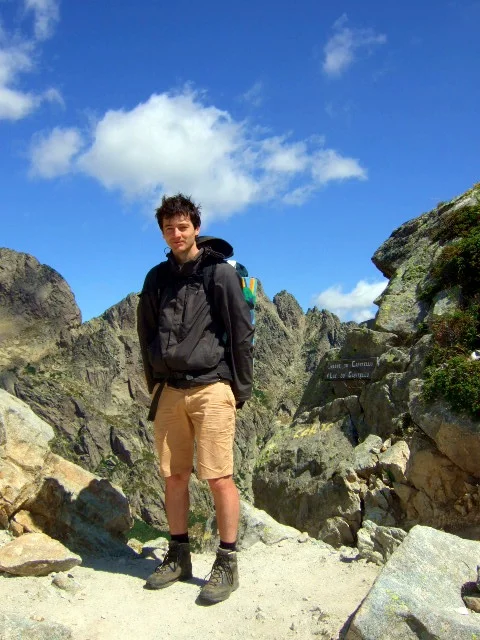


I am an ELLIS Fellow in the ELLIS Unit Paris. I enjoy working with curious, driven people across academia and industry. This page is meant to help you understand how we might work together and make it easier for both of us to get started.
PhD and Postdoc Supervision#
Over the years I have had the privilege of supervising many wonderful PhD students and postdocs at Inria and through collaborations with universities (MBZUAI, École Polytechnique, ENS Paris-Saclay, Comenius University, University of Copenhagen). Some of the topics I am currently most excited about:
- Massive recursive self-improvement for language models
- Post-post-training: going beyond fine-tuning with test-time computation and inference-time search
- Reinforcement learning from human feedback and LLM alignment
- Game theory and multi-agent learning
- Bandit algorithms and sequential decision-making
- Self-supervised and representation learning
I want to be transparent: in recent years, I have only been able to take on new students in very specific circumstances: typically when there is already a strong personal connection, a well-defined research direction, and a clear co-supervision arrangement in place. My current commitments mean I simply cannot give a new student the attention they deserve unless the setup is right from the start.
If we have not had a chance to interact before, the most realistic path is to come with your own funding already secured (or a concrete plan for it) and, ideally, a local academic co-advisor at the institution where you will be based. I realize this is a lot to ask, and I genuinely wish I could be more flexible, but I have learned the hard way that taking on students without the right structure in place is unfair to everyone, especially the student. Co-supervision with other researchers is very welcome. Many of my most rewarding supervisions have been joint efforts, and it often leads to richer research.
Have a look at current and past students to get a sense of the kind of work we do together.
Research Collaboration#
I am always happy to explore research collaborations, co-supervision arrangements, and visits from fellow researchers. My recent work focuses on massive recursive self-improvement, post-post-training (test-time computation and inference-time search), LLM alignment, game-theoretic approaches to RLHF, reinforcement learning theory, and reasoning in large language models; see projects for what is currently on my mind.
If you see an interesting overlap with your own work, I would love to hear from you. A short note with a concrete idea or question is the best way to start a conversation. I particularly enjoy collaborations that bring together different perspectives, whether from mathematics, computer science, neuroscience, or industry applications.
Asking for Advice#
I am happy to offer advice when I am well placed to help. The best conversations begin after you have done the first round of thinking, not before it. A specific question gives me something real to respond to; a request to “pick my brain” or share general thoughts usually does not.
I am especially useful on research direction, reinforcement learning and bandits, LLM post-training and alignment, building research teams and organizations, and technically ambitious AI startups.
- Start with the decision. Tell me what you are trying to decide, the options you are considering, and what would make the answer useful.
- Do the basic homework first. Please look at my research, projects, and other public material, and use search or AI for factual questions. Ask me for judgment, pattern recognition, lived experience, or a perspective that is genuinely specific to my background. Different people are right for different questions.
- Use the lightest useful format. If the question can be answered in a few sentences, email is better than arranging a call. If it needs real-time discussion, send the specific question and a short agenda when you ask for the meeting.
- Say what you actually want. Advice, feedback, validation, an introduction, and a favor are different requests. Being direct about which one you want is kinder and makes it much easier to help.
- Close the loop. Tell me what you decided and what happened, even if you chose not to follow my advice. That small follow-up turns a one-off exchange into a relationship and makes me much more likely to help again.
Auren Hoffman’s guide to asking for advice makes many of these points very well. The principle I especially like is simple: ask the right question of the right person, then do something with the answer.
Speaking and Keynotes#
I enjoy giving talks and regularly speak at international conferences, summer schools, corporate events, and government forums. Recent examples include the Global AI Show, GLOBSEC Forum, Machines Can Think, RLSS, and various AI summits around the world. You can find the full list on the talks page.
Organizer media kit → Short/long bio, suggested talk topics, high-resolution photos, CV and résumé.
If you would like me to speak at your event, please send me an email with the event name, date, location, expected audience, and a suggested topic. The more concrete and specific the invitation, the faster I can give you a clear answer. I try to be responsive and will let you know quickly if it is a good fit.
I should be upfront that my schedule is quite packed, and I have found that the smoothest collaborations happen when the organizational overhead on my side is minimal, ideally just showing up and giving the talk. I am unlikely to be able to handle reimbursement forms, coordinate logistics calls, or manage back-and-forth arrangements in a timely way, and I would not want to hold things up on your end. So the more your team can handle directly, the easier it will be for both of us to make this work.
On a practical note: I do not send slides in advance, do dry runs, or attend speaker briefings on how to deliver a talk. I like to decide the final shape of my presentation very close to the actual talk, sometimes just minutes before, so that the content is as fresh and relevant as possible. I am happy to share a live link to my slides that your team can access at any time, and this has always worked smoothly. All you need is a reliable internet connection in the venue. If that is not possible, I can always bring my own laptop. There have never been technical issues with this approach, and it means you get the best version of the talk rather than a stale draft sent weeks earlier.
One thing I feel strongly about: when you invite someone as a keynote speaker, that invitation should mean what it says. I have occasionally encountered situations where an organizer extends a keynote invitation and then, after the speaker has committed, follows up asking them to sponsor the event, cover their own travel, pay a registration fee, or fill out funding applications. I consider this a serious breach of trust and a practice that undermines the academic community. We all benefit when conferences are run in good faith: speakers give their time and expertise, and organizers provide the platform and the support to make it happen. If your event cannot cover basic speaker expenses, please be upfront about that from the very first message so we can have an honest conversation. What does not work is changing the terms after someone has already said yes.
Czech and Slovak AI Community#
Supporting AI activities in Slovakia and the Czech Republic is something very close to my heart. I have been involved in various ways for over two decades, from organizing math seminars and mentoring students to speaking at local conferences, advising on national AI strategy, and helping build bridges between the CEE region and the global AI community. I am always happy to help where I can.
If you would like for us to get together, the kindest thing you can do for both of us is to be proactive about it. Open-ended lines such as “let me know when you are around,” “let me know when you have time,” or “let me know when you want to meet” almost never work for me, even when I would genuinely enjoy seeing you. They sound friendly, and I know they are usually meant that way, but in practice they shift the work of planning onto the person with the least flexible calendar. If I am in a very busy period, that can make the invitation feel less like a warm proposal and more like a small order to coordinate someone else’s plan. I am probably not the right person to receive that kind of open-ended task, and it can easily kill the chance of a meeting for a long time simply because I cannot turn it into an actionable next step.
The much better version is simple and warm: propose a concrete date, place, occasion, and plan, and make it easy for me to say yes or no. I am almost never already in the region (“Nebudeš náhodou na Slovensku, v Košiciach a v Prahe? Nemáš náhodou cestu okolo?”) unless a trip has been planned in advance, and my calendar fills up fast. I have had to cancel on wonderful people more times than I would like, almost always because plans were left open-ended for too long, so the more concrete and organized the invitation, the more likely I can say yes, and I really do want to say yes.
Po slovensky: Ak by ste sa so mnou radi stretli, najlepšie je byť proaktívny a urobíte tým radosť obom stranám. Vety typu „daj mi vedieť, kedy budeš na Slovensku“, „daj mi vedieť, kedy sa ty chceš stretnúť“ alebo „nemáš náhodou cestu okolo?“ sú myslené milo, ale u mňa žiaľ väčšinou nefungujú. V praxi totiž presúvajú organizáciu stretnutia na človeka, ktorý má najmenej flexibilný kalendár. Keď mám veľmi rušné obdobie, nepôsobí to potom ako konkrétne pozvanie, ale skôr ako malá úloha alebo pokyn, aby som ja vymyslel, kedy, kde a ako sa má stretnutie stať. Na takéto otvorené zadania asi nie som ten správny adresát. Niekedy to zbytočne zabije možnosť stretnutia na veľmi dlho, jednoducho preto, že z toho neviem urobiť ďalší krok.
Oveľa lepšie funguje milé a konkrétne pozvanie: navrhnite dátum, miesto, príležitosť a plán, a spravte z toho niečo, na čo viem jednoducho povedať áno alebo nie. V regióne takmer nikdy nie som náhodou a kalendár sa rýchlo zaplní. Veľmi rád pricestujem, keď je cesta vopred naplánovaná a naozaj sa na to teším.
Startup Advising and Investing#
I am a Venture Partner at Sparkle Ventures, KAYA VC, Formula VC, Cherry Ventures, Visionaries, and RAISE Ventures, and an angel investor and advisor to AI startups across healthcare, materials science, procurement, and developer tools. See the full list on the service page.
If you are building something interesting with AI and think I could be helpful, I would be glad to hear from you. A short note about what you are working on and how I might contribute is all it takes to get started. I am especially drawn to teams tackling hard technical problems with real-world impact, and I enjoy working with founders who are curious, ambitious, and open to honest feedback.
Contact#
The best way to reach me is by email. You can find my details on the homepage. I look forward to hearing from you.
Please note that I receive a high volume of email and am unable to respond to all messages in a timely manner.
- For media inquiries regarding Isara Labs, contact press@isara.io.
- For media inquiries regarding Inria activities, contact com-lille@inria.fr.
- For media inquiries regarding ENS Paris-Saclay activities, contact secretariat-mva@ens-paris-saclay.fr.
For speaking invitations, meeting requests, potential collaborations, reviewing requests, and other inquiries: if I have not responded within 1 week, please assume I am regretfully not available.
If we have an ongoing collaboration or conversation and I have not responded within 1 week, don’t hesitate to ping me again.